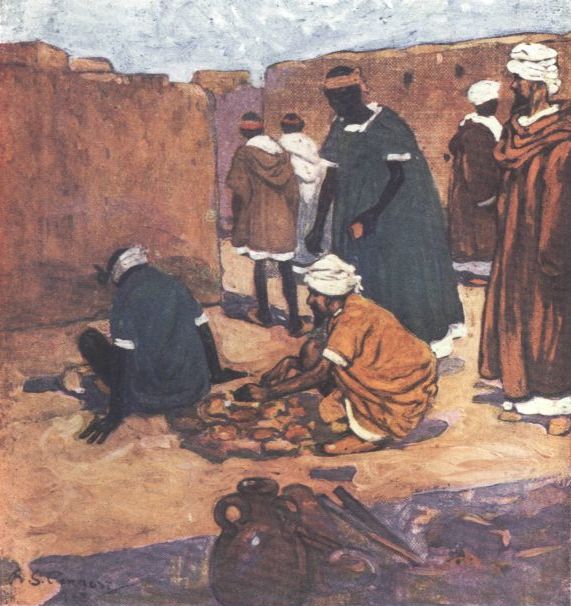
A BRICKFIELD, MARRAKESH
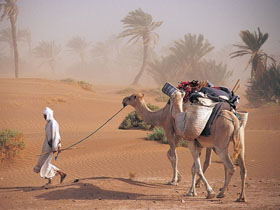
The Moroccan pre-Sahara begins as soon as you cross the Atlas to the south
View Larger Map
View Larger Map
Extreme Adventure Itinerary
Enduro Adventure Itinerary
Day 1 – Saturday
Arrive at hotel...
Introductions and brief safety talk
Day 2 - Sunday
Day 3 - Monday
175-200km route along stoney and sandy pistes towards Zagora, travelling along the border with Algeria in places, where the group will pass several military outposts, hill forts and Berber villages and encampments. The group will need to cross several chotts, (dried river bed or lake) and there is a 10km meteor crater to cross also. The scenery is spectacular and the group will stop to camp that night.
Day 4 - Tuesday
150-200km route from night camp leaving early to make good time so the group can spend the afternoon relaxing by the pool at the hotel in Zagora. The pistes are fast taking the group through the only col (pass), a gateway from the Sahara to the lush oasis of the Draa valley. Zagora is the last major town before crossing the desert to Mauritania.
Day 5 - Wednesday
200km route from Zagora to Mhamid crossing the dunes at Iriki. Navigation is key to avoid the softer sections of sand as the dunes are constantly shifting. The final 10km is a dusty chott that leads into the palm groves of Mhamid where the group will make camp. This is a long and demanding day and depending on progress of the group there is a chance of making camp in the dark.
Day 6 – Thursday
There are 2 routes from night camp to stay in the evening with Berber tribesmen in their tents depending on how riders are fairing. A 175km easier southern route or a 250km route heading north back through the pass from the Sahara to Zagora. The first 100km of the northern route is along rugged mountain tracks and passes, later leading to sandy pistes. If the northern route is taken, it will be an early start and another tough day’s riding.
Day 7 – Friday
175km route back to Merzouga that should ensure an early arrival at the hotel to relax by the pool or do some shopping. Mostly fast sandy pistes with a large chott to cross, covering some of the same sections as day 2.
Day 8 – Saturday
Departure from hotel...
First Adventure Itinerary
| he First Adventure Itinerary is designed for riders with a moderate or limited experience who have not ridden in Morocco. It allows the rider to build a wide experience of different conditions at a suitable pace without the pressure of long days and the need to cover big distances. Day 1 - Saturday Arrive at hotel Day 2 - Sunday Introduction to the quad bikes, safety equipment and general issues regarding safety 150km round trip to along well defined flat desert tracks to enable riders to get used to the terrain and their equipment. Mid-morning stop at deserted mud village and lunch-time break in the palm groves outside Rissani. Afternoon ride back to hotel, on terrain depending on the progress of the riders Day 3 - Monday 180km round trip around the Erg Chebbi dunes with a lunch-time stop at Meski Oasis. Riders will experience soft sand conditions and the group will need to navigate around the drifting sand from the dunes. The route passes through a dry river bed where conditions can be equally demanding. Soft clay dust and sand masked by a hard clay crust, or soft mud depending on seasonal changes Day 4 - Tuesday 150km route to night camp in Bedouin tents with local tribesmen. The ride will build on the experience gained so far. Day 5 - Wednesday 150km route returning to the hotel closeby the Algerian border Day 6 - Thursday Optional rest day for those wanting to take a break from riding with a visit to the souks at Rissani on market day. There will be a lunch organised and the opportunity to shop and browse Moroccan carpets, jewellery and other handicraft. For others wanting to continue to ride, the consensus will determine a route for this smaller group Day 7 - Friday Riding in the Erg Chebbi dunes, rising before dawn to take advantage or the harder sand conditions. The group will ride into the dunes and learn about navigating a course across this extreme landscape, returning to the hotel for lunch. Those wishing to explore the dunes further can opt to go on an evening trip after the heat of the day. Day 8 - Saturday Departure |
Trips and Itineraries
October to May avoids the intense heat of the deserts south of the Atlas mountains. Here you will find huge baron landscapes punctuated with oases and fertile palm valleys where nomadic tribesmen have traded for centuries. A unique experience which is different to anything else you will encounter, big long tracks and mountainous sandy dunes.
Morocco Summer and Winter Trips are 6 days riding with collections from Alicante and Almeria, Spain, group collections can be arranged from Marrakech.
Geotag Icon Spotlight: all about argan
Throughout this journey, we will be documenting people, projects and ideas that we find inspiring – whether they relate to climate change, agriculture, rural transport, cooperative projects, human rights or humanitarian welfare (or anything else that interests us!) – in a series called “spotlight”. Here’s the first: on the argan tree, the women’s cooperatives who extract oil from it, and the tree’s importance in preventing desertification. If you like, you can listen to some audio we recorded in one of the cooperatives (”The merry nutcrackers“) as you read:

Towards the south of Morocco, away from the irrigated farmland of the north and its crops of potatoes, sugar cane, cereals, tomatoes, strawberries and field scale vegetables, we entered an area dominated by cereal production and extensive livestock farming (sheep, cattle and goats). Here, we regularly passed farmers carrying milk churns balanced between their legs as they drove their little Peugeot scooters to the local dairy co-operative. Threshing machines chugged away next to big stacks of cereals, which were transported there by tractor, donkey or camel.
Still further south, the mixed livestock gave way to goats, who are able to survive on the scrubby shrubs and trees found in this arid region. We spent many hours in the shade of thorny trees, sitting out the heat of the day, listening to larks singing away and watching goats climb the trees to reach their fruits. Having more than a passing interest in most (all!) things agricultural and natural, we set about finding out more about the trees. All the trees and bushes were the same species and, not recognising them, the first thing to find out was what they were. The first person we asked told us they were argan trees, and he went on to explain that oil is extracted from the seed by women, and is used for cooking, cosmetics and pharmaceuticals.
The argan tree (Argania spinosa) is a slow growing, spiny tree or shrub (growing up to 7-10 metres) endemic to south-western Morocco where it grows over an area of about 320,000 square miles.
As well as producing oil, the trees themselves provide forage for animals (the climbing goats) and fire wood for local communities. The waste pulp from the extraction process makes a highly palatable animal feed. It’s very much a multi use tree, and it plays an important part in the local economy, providing a much needed income for rural households.
Its roots consolidate the soil and its canopy provides shade for other plants and crops, helping to maintain soil fertility and structure, and reducing soil erosion by wind and (infrequent but heavy) rainfall. As such, it’s important in the battle against desertification and, to a certain degree, in mitigating the effects of climate change. The production of argan oil has been taking place for centuries on a small cottage industry scale and, traditionally, women have always done the processing – an extremely labour intensive job. Nowadays, oil production has largely moved from homesteads to women’s cooperatives, and this pooling of resources and cooperative investment is helping to create a thriving industry in the arid south-west of Morocco, making a significant contribution to the economy and living standards in the region. The highly marketable products are sold in upmarket retail outlets around the world.

Traditional method of extracting argan oil
Argan oil is extracted from the kernel of the fruits of the argan tree. This labour intensive process starts with the removal of the outer layer of the ripe fruit to extract the nut, either by hand or by feeding the fruit to goats and removing the undigested nut from the dung. The nuts are then cracked using a small rock as a hammer against a larger rock (anvil) to remove the oil-bearing kernel. The kernels are air dried in clay containers, lightly roasted, left to cool and then ground into a paste using a hand turned mill. This paste is mixed with water and hand squeezed to extract the emulsion. Due to the high water content, the oil doesn’t keep well, so it need to be pressed regularly and have salt added to preserve it. While this method is still used for home consumption, the inconsistency of the end product means that most commercial production is now carried out in cooperatives.
Cooperative method of extracting argan oil
With the pooling of resources and the ability to collectively invest, some of the production stages in cooperatives have been mechanised, allowing a greater output and a more consistent end product. This volume of production has allowed rural women to market their products nationally and globally, command higher prices and significantly increase their income. The following is an indicative example of the production in one of the cooperatives, but levels of mechanisation vary.
The removal of the outer fruit on the whole has been mechanised, so after harvesting, the manual work starts with the cracking of the nut. This is done in large rooms with sometimes dozens of women sitting on cushions, all with their own sacks of nuts in front of them, tapping away with a rock at an incredible speed to extract the kernels.
The room is filled with the sound of the rhythmic tapping and constant chatting, turning this lengthy part of the process from a solitary or small group task into communal and sociable work. At the end of the day each person has their kernels weighed and logged in a ledger. The women are free to work for as long or as little as they want or can, allowing them to fit the work around their other commitments.
After the kernels have been extracted, cooking grade oil is lightly roasted and then ground into a paste (most co-ops have mechanised this step). The paste is then mechanically pressed, meaning there is no need to add water and the purer oil produced is then filtered and bottled. Oil for cosmetic products is not roasted, but is pressed and filtered before being processed into the end products.
In recent decades, there has been a decline in argan trees, due partly to several years of lower than average rainfall and partly to population pressure, especially overgrazing by livestock and firewood collecting. But the population view the argan tree as a valuable resource worth protecting. Replanting programmes have now been introduced and, although initially these weren’t altogether successful (due to inappropriate management), they’re now improving. This, along with the increasing marketing of the oil and cosmetics as a high quality product in a world market, means the future looks promising for argan.
Morocco Travel Guide
For some, it begins with a glimpse of the cloud-veiled Rif, the first of three giant ranges that slice sideways across the mountain and culminate in the High Atlas, a wonderfully impressive barricade of snow-clad peaks that tower above a mystic city, dark ravines and hidden valleys. Beyond the oases of extraordinary fertility, planted with pomegranite and palm and the only bulwarks against the advances of the sterile desert. Here the air is luminous, the silence almost deafening and one understands instinctively the burning desire for purity which has fueled every Moroccan dynasty.
The Almohads, Merinids and Almoravids came from the dunes but their genius erupted further north in a spectacular flowering of mosques, minarets and palaces that is everyones vision of life in the Orient. The monuments of Fes and Marrakech defy heaven in their own opulence but, at the heart of even the most sumptuous, there is the modest, desert dream of a life of quiet contemplation passed amid ripening fruit and the gurgling of fountains.
For some, the countries main appeal lies in the quality of its beaches. Morocco has always been a crossroads, the place where the East collides with the West and Africa shakes hands with Europe across the narrow straits of Gibraltar. It also marks the merger of the Mediterranean with the Atlantic and this gives Morocco two strikingly different coasts.
You may like to combine a few days on one of the beaches together with exploring the kasbahs and oases of the pre-Sahara where the only waves are those shaped by the receding dunes. You could disappear into the medieval world of Morocco's ancient cities and souks or go skiing in Oukaimeden or trekking on foot or on horseback in the high Atlas or play golf on some of the finest courses in the world.
Moroccans are friendly, polite, competitive and intensely curious about the outside world. Islam is a thriving faith but Morocco's version is also extremely moderate, open minded and tolerant. You can go a long way into the heart of their culture just by feeling independent enough to accept their hospitality which pours forth from rich and poor alike whether in the city or the countryside. Such gestures of friendship are what transforms a good holiday into a great experience, for then you are no longer just visiting but really living.
Sahara, brief view
The Sahara desert of Morocco
The Sahara is the world's largest desert. Only a small part of the Sahara is fertile and it is here that corn, dates and other fruits grow. These parts are fed by underground rivers and oases. The Sahara can be an inspirational experience at night, with the air being crisp, clean and clear and the stars being so close you can almost touch them. The desert also has a deafening silence at night.
The Sahara desert stretches across much of North Africa covering over 9 000 000 square kilometers (roughly the size of the United States)। In fact, the Sahara covers some 30% of the entire African continent. It is the hottest place in the world with summer temperatures that often exceeds 57 degrees Celsius. It has an annual rainfall of 0 - 25 millimeters and is very windy with windstorms sweeping the sand up to heights of 1000 meters and moving the sand dunes constantly.
The Sahara consists of one quarter volcanic mountains, one quarter sand, rocks and gravel-covered plains and small areas of vast permanent vegetation. The vegetation includes shrubs, grasses, and trees in the highland and in the oases along the river beds. Some of the plants are well adjusted to the climate since they sprout within three days of rain and sow their seeds within two weeks after that.
Animals in the Sahara are mainly Gerbils, Cape Hare, Deer, Weasels, Baboons, Jackals, Sand Foxes, Mongooses, Desert Hedgehogs and over 300 bird species.
The following towns and villages are located in the Sahara of Morocco:
Tata: Located where the desert meets the mountains, this small desert town has the reputation for being the hottest town in Morocco.
Tleta Tagmout: A desert oasis
Foum Zguid: Located where the Jebel Bani range meets the desert, this charming desert town boasts one of the largest palm groves in Morocco.
Zagora: Located in the magnificent Drâa Valley, this town is a popular starting for camel excursions into the desert. A sign proclaiming that it is 52 days to Timbuktu is one of the most photographed features of the town.
Tinfou: This small town is located along the Draa Valley route where the stony ground gives way to the sand-dunes of the desert.
Erg Chebbi: This settlement in the dunes of the Sahara offers basic tourist facilities for visitors exploring the enormous sand dunes.
Ouarzazate: Catering for the tourist trade, Ouarzazate has a number of hotels and visitors enjoy the typical Moroccan market in the city center. The Kasbah is beautifully preserved and gives in interesting glimpse into the lives of the people who live there.
Rissani: Also known as Tafilalt, a cluster of small villages around the town of Rissani, is located along the last stretch of the Ziz valley. The region has a long and fascinating history and was a kingdom separate from Morocco between the 8th and 14th centuries.
Merzouga: Located at the start of the oasis zone, inhabitants tap the underground water sources for drinking and irrigation purposes, and the area around the town is well cultivated.
Erfoud: This small oasis town is used by many travelers as a base for exploring the beautiful Ziz valley.
Popular activities in the Sahara include sunrise and sunset camel rides over the dunes, sleeping out under the desert skies, ATV/4X4 trips, visiting traditional Berber villages, dune-boarding,
Read more.
The Sahara desert of Morocco
The Sahara consists of one quarter volcanic mountains, one quarter sand, rocks and gravel-covered plains and small areas of vast permanent vegetation. The vegetation includes shrubs, grasses, and trees in the highland and in the oases along the river beds. Some of the plants are well adjusted to the climate since they sprout within three days of rain and sow their seeds within two weeks after that.
Animals in the Sahara are mainly Gerbils, Cape Hare, Deer, Weasels, Baboons, Jackals, Sand Foxes, Mongooses, Desert Hedgehogs and over 300 bird species.
The following towns and villages are located in the Sahara of Morocco:
Tata: Located where the desert meets the mountains, this small desert town has the reputation for being the hottest town in Morocco.
Tleta Tagmout: A desert oasis
Foum Zguid: Located where the Jebel Bani range meets the desert, this charming desert town boasts one of the largest palm groves in Morocco.
Zagora: Located in the magnificent Drâa Valley, this town is a popular starting for camel excursions into the desert. A sign proclaiming that it is 52 days to Timbuktu is one of the most photographed features of the town.
Tinfou: This small town is located along the Draa Valley route where the stony ground gives way to the sand-dunes of the desert.
Erg Chebbi: This settlement in the dunes of the Sahara offers basic tourist facilities for visitors exploring the enormous sand dunes.
Ouarzazate: Catering for the tourist trade, Ouarzazate has a number of hotels and visitors enjoy the typical Moroccan market in the city center. The Kasbah is beautifully preserved and gives in interesting glimpse into the lives of the people who live there.
Rissani: Also known as Tafilalt, a cluster of small villages around the town of Rissani, is located along the last stretch of the Ziz valley. The region has a long and fascinating history and was a kingdom separate from Morocco between the 8th and 14th centuries.
Merzouga: Located at the start of the oasis zone, inhabitants tap the underground water sources for drinking and irrigation purposes, and the area around the town is well cultivated.
Erfoud: This small oasis town is used by many travelers as a base for exploring the beautiful Ziz valley.
Popular activities in the Sahara include sunrise and sunset camel rides over the dunes, sleeping out under the desert skies, ATV/4X4 trips, visiting traditional Berber villages, dune-boarding.
How to Sand Surf
Member
Do you want to surf the perfect wave, or the perfect sand dune? Some of the world's largest sand dunes have been attracting quite a crowd of enthusiastic sandboarders lately. Learning to sand surf is a lot like learning to surf, but even more like learning to snowboard.
One of the best sand surf hotspots is in Swakopmund, Namibia (Namib Desert, Africa). Rated as one of the highest dunes in the world, Dune 7 stands around 300 meters tall (980 feet). As such, it is the ultimate spot for sand surfing..
Whether you want to sand surf on vacation in Africa, or at any other sandy spot, you will need the following:
Difficulty: Moderate
Instructions
Things You'll Need:
• A board
• A desert
1. Step 1
Pick the right location. You need a desert to sand surf...a real desert.
The best place would be Namibia. Where in the world is Namibia? Well, maybe the name is unfamiliar to you because it was formerly known as South West Africa, a former German colony in the colonial years before World War 2. In more recent years, it was a protectorate of South Africa and since 1989 an independent democratic country. Besides the Namib desert, it also spots one of the world's best game reserves namely the Etosha National Park. To summarize, your sand surfing destination can be found just above South Africa, on the left against the West Coast of Africa.
2. Step 2
You need a standard snowboard. If you haven't mastered the technique of surfing yet, you may also use a sled, or a board made of a simple, flattened cardboard box. Basically, any flat board will do nicely when you sand surf.
3. Step 3
Technique is important if you want to sand surf and not get injured. If you fall off at high speed, you hit sand, and the landing can be a tumble downhill. It is also important to realize that the bottom edge of a dune may very well not curve out gently, but hit gravel at a steep angle. It may be a very quick stop at the bottom if you don't slow down as you descend.
4. Step 4
Check the condition of the sand. The weather plays an important role in prime sand surfing conditions. A bit of humidity (mist) will compact the sand enough so that it will provide for a more solid surfing experience. If the sand is to loose and warm, it will create a drum sound as you walk over it as the sand shifts. That is usually a bad sign.
5. Step 5
Pack suntan lotion and more suntan lotion. You simply can't pack enough suntan lotion and hats. Good sunglasses and enough water will make up the rest of your surfing gear. It's just good common sense.
6. Step 6
If you can manage it, rent a quad bike. Climbing up a sand dune with a board is a tiresome experience and can take you easily 30 minutes or more, depending how fit you are. Most dunes are quite steep, so it is more like climbing up than walking up. If the sand is compact, which is ideal, it is easier to walk up. On a hot day, you may just sink into the sand up your knees while trying to plow ahead up the dune. A nice addition to your trip may be a quad bike, to drive up the from the backside of the dune.
Enjoy your sand surfing!
.